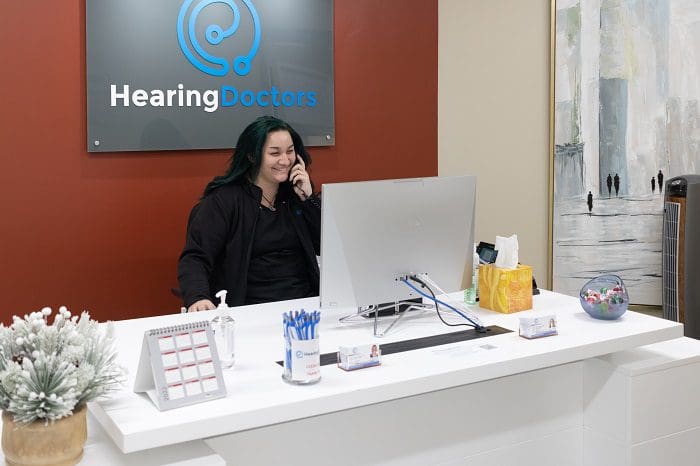

October is National Protect Your Hearing Month, an opportunity to think about how well you’re hearing and the role your hearing plays in your day-to-day experiences.
Hearing changes often develop gradually, making it easy to adapt to them without realizing how much they may be affecting you. You might find yourself asking people to repeat themselves, turning up the TV, or working harder to follow conversations.
For one of our patients, Robert, a simple recommendation led him to seek support and ultimately changed how he experiences the world around him. His story shows how hearing can influence far more than conversations, from professional interactions to relationships to your confidence in social situations.
Finding a Practice Built on Care and Expertise
Robert’s journey began with a referral from his trusted primary care doctor. For many people, a recommendation from a healthcare professional provides reassurance when choosing where to seek support; you want to know that you’re in capable hands and that you’ll feel comfortable with the people caring for you.
From his first visit, Robert felt a sense of familiarity. “The culture reminded me of almost my business a little bit,” he shared, “and I just felt almost at home when I was here.”
That sense of comfort can make a real difference. At Hearing Doctors, our goal is to create an environment where you can ask questions, understand your options, and feel listened to throughout your care.
From Public Speaking to Daily Conversations: Addressing Real-World Challenges
In his professional life, Robert was becoming increasingly frustrated by the impact of his hearing challenges. As a public speaker, he was finding it harder to hear colleagues, students, and audience members, which made it more difficult to communicate with the clarity his work required.
The demands of a busy career can make even subtle hearing difficulties more apparent. When hearing starts to interfere with your communication at work, a comprehensive hearing evaluation can help identify what’s contributing to the difficulty and provide a clearer understanding of how your hearing may be affecting you.
Robert’s assessment gave him that insight. As he described, his audiologist “actually paid attention to my enunciation, my pronunciation as well, of different words at different levels. And that’s when I knew that there was a problem.”
The experience also helped him recognize how much his hearing problems had been influencing his work. “This is something that I didn’t know had a big impact on my business and my demeanor,” he said.
Whispering at Family Gatherings: The Unexpected Side Effects of Hearing Better
The changes Robert experienced extended beyond his professional life. After being fitted with hearing technology that worked well for him, his family began to notice a difference too.
“What they noticed about me is I stopped yelling,” he said with a laugh. “Before, I talked really loud... And they noticed that '[he]'s starting to whisper now. Why is he whispering?’ And it’s because I could hear.”
Speaking louder to compensate for your difficulty hearing can become part of everyday communication. When hearing improves, your own voice may feel more balanced, making conversations less strained.
His wife was particularly pleased. “My wife was very happy about it because she could speak to me in a normal voice,” Robert shared. Even simple moments, such as watching a movie together, became easier when he didn’t have to turn the sound up.
These everyday changes can have a meaningful impact. For Robert, better hearing has helped make communication at home feel more natural and brought greater ease to the moments he shares with his family.
Rediscovering the Full Spectrum of Everyday Life
Over time, subtle changes can affect the way you experience conversations, music, and the sounds around you. Working with a team of hearing health experts can help you understand your hearing needs and find an approach tailored to your lifestyle so you can make the most of the sounds that matter to you.
This National Protect Your Hearing Month, take a moment to consider whether changes in your hearing may be affecting your daily life. A comprehensive evaluation can give you a clearer understanding of what’s happening and what options may be available.
Contact our team at Hearing Doctors today to get started!
Frequently Asked Questions (FAQs)
Q: What happens during a comprehensive hearing evaluation?
A: A hearing consultation goes beyond a simple screening. It begins with a conversation about your health history, your lifestyle, and the situations where you may be having difficulty hearing. We then assess how well you hear different pitches and volumes, along with how effectively you understand speech, including in more challenging listening environments.
Together, these findings provide a clearer picture of your hearing and help your audiologist recommend care that reflects your individual needs and lifestyle.
Q: How do I know if I need hearing aids?
A: The decision to use hearing aids is one you can make together with your audiologist, based on your hearing needs, lifestyle, and personal preferences.
If you find it difficult to follow conversations in restaurants, regularly need to turn up the TV volume, or feel tired after social situations, it may be worth discussing whether hearing technology could help. Your audiologist can talk you through the available options and help you find a solution that feels comfortable and fits naturally into your everyday life.
Q: How can I protect my hearing from further damage?
A: Protecting your hearing involves reducing both the intensity and duration of your exposure to loud sound. Keep volumes at a comfortable level, move farther away from loudspeakers or equipment when possible, and take regular breaks in quieter environments during prolonged exposure.
You can also wear appropriate hearing protection at concerts, sporting events, or noisy workplaces or when using power tools. Custom hearing protection may be worth considering if you regularly spend time in loud environments.
Source:
Search
Popular Blogs
Safeguard Your Hearing Health: Robert's Story

Dr. Ana
Anzola, CCC-A, FAAA, ABA Principal
OTC vs. Prescription Hearing Aids: Which Is Right for You?
Dr. Ana
Anzola
The Link Between Hearing Health and Dementia Risk: What It Means for You

Dr. Ana
Anzola, CCC-A, FAAA, ABA Principal
Hearing Sound Clearly Again: Alexander’s Journey to Better Communication
Get Expert Care in Virginia, Maryland and DC.
Looking for trusted, local support? Our specialists at Hearing Doctors in Virginia, Maryland and DC are here to help.
Fill out the form to connect with our team and take the next step toward better hearing health!